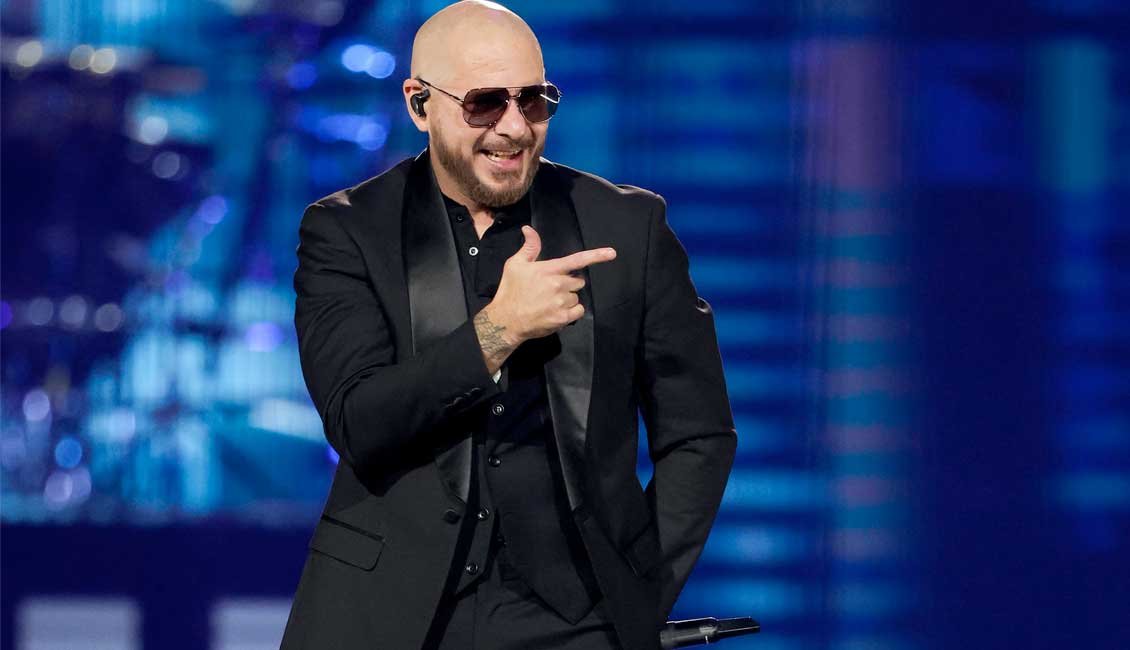
Few artists have embodied the American dream quite like Pitbull. Born Armando Christian Pérez on January 15, 1981, in Miami, Florida, the man now known worldwide as “Mr. Worldwide” built his career from the ground up, transforming a childhood marked by struggle into a life defined by ambition, charisma, and relentless hustle. His rise from the Cuban-American neighbourhoods of Miami to the world’s biggest stages is a testament to talent, timing, and tenacity, a story rooted as much in culture as it is in sound.
Growing up in Miami’s Little Havana, Pitbull was surrounded by a rich blend of Latin rhythms, street culture, and hip-hop energy. His parents, Cuban immigrants, instilled in him a strong sense of heritage and a belief in the power of hard work. But life wasn’t easy. His father’s involvement in drug dealing and the family’s financial instability meant Armando had to grow up quickly. He found an escape in words poetry, freestyle battles, and the vibrant Miami hip-hop scene that was starting to take shape in the 1990s. By the time he was a teenager, music had become both a refuge and a calling.
Pitbull’s first major break came in the early 2000s when he began collaborating with Miami rapper and producer Luther Campbell (Uncle Luke), one of the pioneers of Southern hip-hop. Those early appearances helped him earn credibility on the local scene, but it was his inclusion on Lil Jon’s 2002 album Kings of Crunk that truly introduced him to a national audience. His fiery verse on “Pitbull’s Cuban Ride Out” showcased his rapid-fire flow, bilingual dexterity, and unapologetic swagger, traits that would soon define his career.
In 2004, Pitbull released his debut album, M.I.A.M.I. (Money Is a Major Issue), under TVT Records. Blending crunk, Latin beats, and party anthems, the album captured the pulse of his city. The single “Culo,” produced by Lil Jon, became a club sensation, marking Pitbull’s arrival as a new voice in hip-hop. Over the next few years, he released a string of records – El Mariel (2006), The Boatlift (2007), and Rebelution (2009) each one expanding his sound and audience. Rebelution featured the global hit “I Know You Want Me (Calle Ocho),” which soared to the top of charts around the world and established him as a crossover star capable of transcending language and genre.
As Pitbull’s fame grew, so did his brand. He understood, perhaps better than most, that music was just one part of the larger picture. Rebranding himself as “Mr. Worldwide,” he leaned into his Latin roots while embracing a polished, international image. His collaborations with artists like Jennifer Lopez, Ne-Yo, Christina Aguilera, and Enrique Iglesias produced some of the biggest hits of the 2010s, including “Give Me Everything,” “Timber,” and “Feel This Moment.” These songs became global anthems—irresistible blends of dance, pop, and Latin flair that dominated radio, clubs, and arenas across continents.
Throughout his career, Pitbull has continually evolved. From gritty street rapper to international pop icon, he has mastered the art of reinvention while staying true to his roots. His ability to switch effortlessly between English and Spanish, hip-hop and EDM, charisma and business acumen has made him a cultural bridge someone who unites worlds rather than choosing between them.
Today, with Grammy Awards, countless platinum records, and sold-out world tours to his name, Pitbull stands as one of the most recognisable figures in global music. His story is a modern parable of determination: a man who turned adversity into ambition, who saw Miami not just as his hometown but as the launching pad to the world.
More than two decades into his career, Pitbull continues to live by the motto that has guided him from the start “Turn a negative into a positive.” Whether on stage, in business, or in his community, he remains a symbol of resilience, pride, and unshakable optimism. From the streets of Miami to every corner of the globe, Pitbull’s message is simple and universal: Dale – go for it.