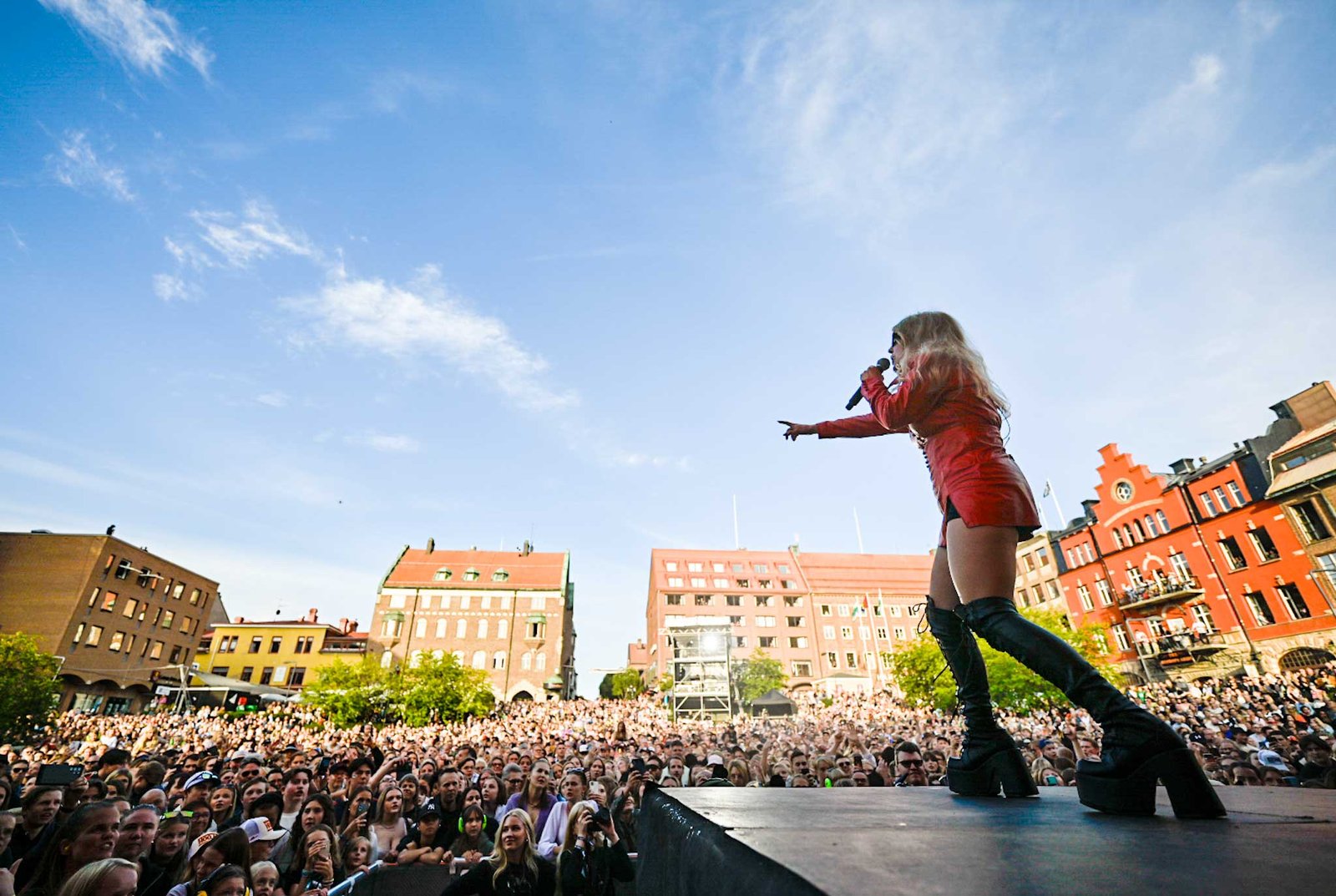
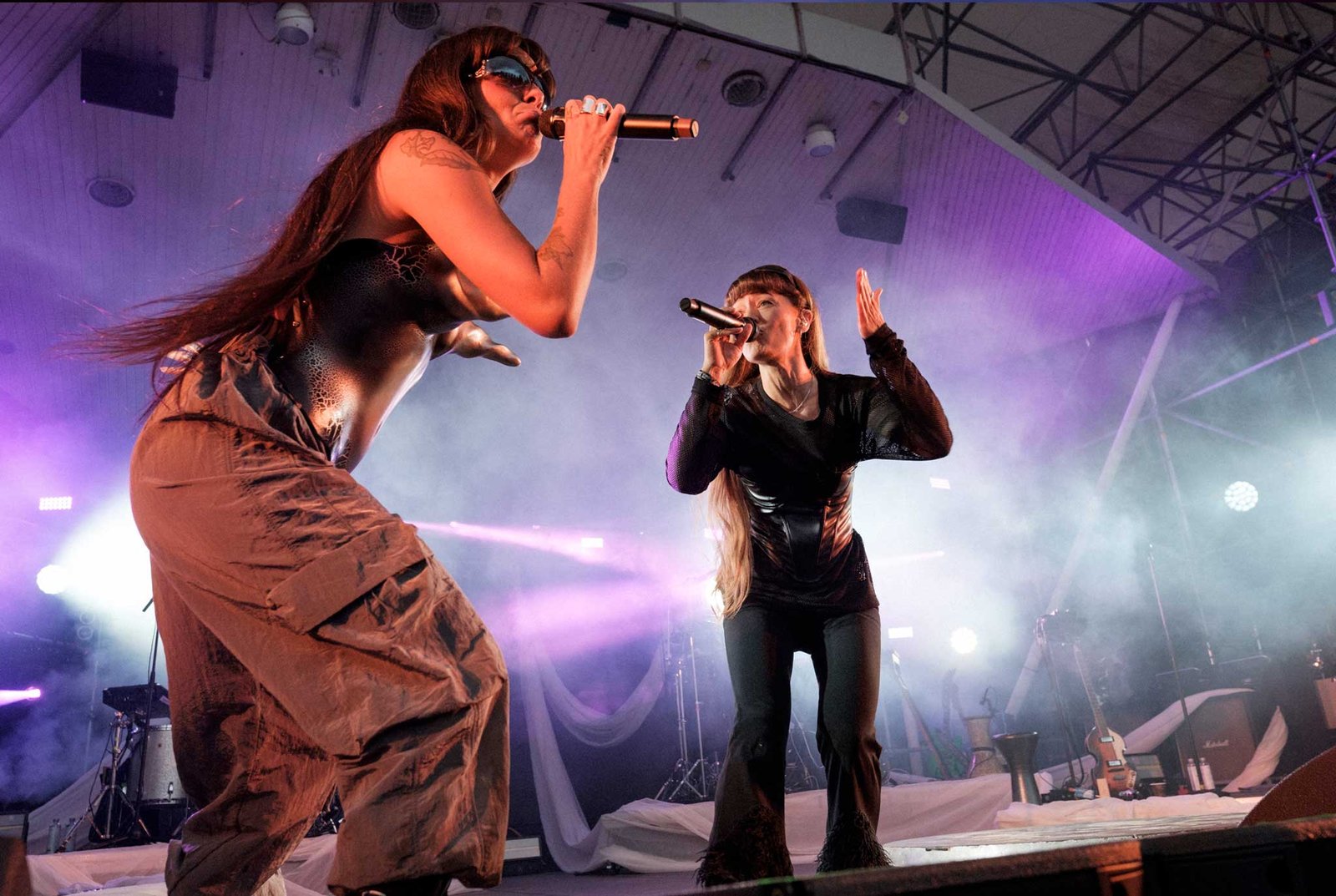
Storsjöyran or just Yran (literal meaning: The Great Lake Giddy Festival) is an annual Swedish musical event going back to the early sixties.
The festival was started in honour of the ancient can-do spirit of the people of Jämtland and to show the rest of Sweden that although this region is sparsely populated, its people have the zest, courage and knowledge to create a festival of international size and standard. A goal which they have reached by gathering around 55,000 visitors every year, and it being the second-biggest festival in Sweden (the biggest city festival in Sweden). The festival is held in the middle of Östersund the last weekend of July. Although the event starts the weekend before with the opening of Krogstråket, when regional bars and restaurants gather near the lake.

Östersund is an urban area (city) in Jämtland in northern Sweden. It is the seat of Östersund Municipality and the capital of Jämtland County. Östersund is located at the shores of Sweden’s fifth-largest lake, Storsjön, opposite the island Frösön. It is the only city in Jämtland. The northern part of the urban area is located inside of the municipality of Krokom.
Östersund is the region’s cultural and economical centre and by tradition a city of trade and commerce. The city had one of the most extensive garrisons in Sweden prior to its closure in the early-21st century. Östersund is home to Mid Sweden University’s largest campus site with approximately 7,000 students. With a total population of 50,960 (2017) Östersund is the 22nd most populous city in Sweden, the 46th most populous city in Scandinavia, and by far the largest inland city in Northern Sweden.
The city was the only Swedish city founded and chartered in the 18th century. Östersund was founded in order to create a trade monopoly over Jämtland whose inhabitants’ lucrative trade annoyed the Swedish Crown. The intention was to persuade the local farmers to deliver merchandise to middlemen in Östersund, but the population opposed this economic philosophy, and Östersund long remained small. It took until the end of the 19th century for Östersund to truly become a city, after the arrival of the railroad and the economic liberalization of that time.